Photography prompt guide
Prompt AI architecture images like a photographer, not a renderer
The best AI architecture images do not feel like glossy renders. They feel photographed: believable lens perspective, straight verticals, controlled daylight, real material texture, natural exposure, and quiet editing. Use prompts to describe the camera and the photographic decision, not just the design style.
Last reviewed: June 22, 2026
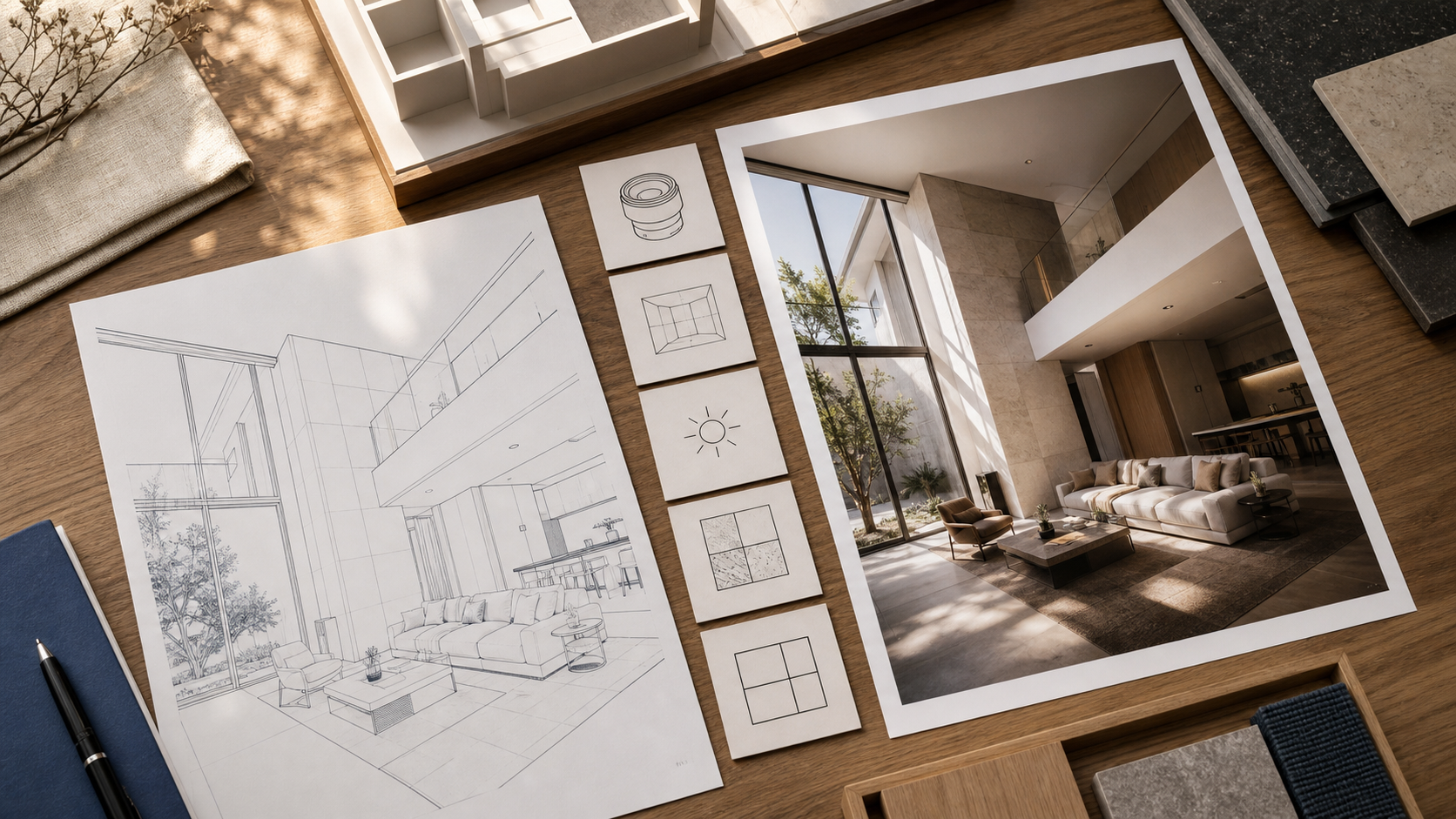
What should an AI architecture rendering prompt include?
Include the source view, what must stay unchanged, the photographic camera position, lens range, light direction, material behavior, exposure mood, and the level of post-production restraint.
Why use photography terms?
Words like 28mm lens, eye-level camera, straight verticals, soft window light, balanced exposure, natural shadows, and subtle color grade tell the model how a real photographer would make the image.
What makes an AI image look too rendered?
Over-wide perspective, impossible reflections, spotless materials, fantasy lighting, harsh bloom, over-sharp edges, and excessive saturation make an image feel synthetic. Prompt against those habits directly.
Keyword research focus
This page targets practical, question-led searches from architects and interior designers:
A better image prompt formula
Write the prompt like a visual production brief: subject and space first, then camera height, focal length, lens behavior, vertical-line control, light direction, exposure, material texture, finishing restraint, and negative constraints. Example: 'Warm minimal living room, oak floor, plaster walls, linen sofa, textured wool rug. Chest-height tripod camera, 24mm tilt-shift interior lens, straight verticals, soft window light from the left, balanced highlights, natural white balance, realistic fabric wrinkles, subtle editorial color grade. Avoid ultra-wide distortion, fake HDR, glowing ceilings, and plastic-perfect surfaces.'
Photography terms that improve AI renders
- Camera height: use eye-level, chest-height, tripod-height, low courtyard view, or elevated balcony view instead of vague words like cinematic.
- Focal length: use 24mm to show interiors, 28mm for balanced architecture views, 35mm for less distortion, and avoid ultra-wide unless the room truly needs it.
- Straight verticals: ask for level camera, corrected vertical lines, no keystoning, and no leaning walls.
- Light direction: specify soft window light, overcast daylight, late-afternoon side light, blue-hour ambient light, or warm practical lights balanced with daylight.
- Exposure: ask for balanced highlights, readable shadows, no blown windows, no crushed blacks, and natural white balance.
- Lens behavior: use gentle depth, controlled reflections, mild edge falloff, realistic glass, and no exaggerated wide-angle stretching.
- Material realism: ask for grain, pores, fabric weave, slight surface variation, patina, dust, and imperfections where appropriate.
- Post-production: use subtle color grade, restrained contrast, natural saturation, editorial finish, and no HDR glow.
Why renders often look fake
- The camera is too wide, so furniture stretches and walls bow at the edges.
- Vertical lines lean inward because the virtual camera feels tilted instead of level.
- Materials are spotless, repeated, or too reflective, which removes the lived-in detail a photo would capture.
- Lighting comes from nowhere, with glowing ceilings, impossible shadows, or highlights that do not match the windows.
- The image is over-processed with too much sharpness, saturation, bloom, contrast, or plastic smoothness.
Negative constraints that help
- Preserve the room layout, camera direction, openings, roofline, facade rhythm, or furniture position when an input image matters.
- Do not add extra windows, doors, staircases, columns, unreadable signage, random artwork text, or decorative clutter.
- Avoid ultra-wide distortion, warped furniture, leaning walls, bowed lines, and impossible structure.
- Keep the room proportions, camera direction, and vertical lines believable.
- Avoid over-saturated colors, fake HDR, fantasy lighting, excessive bloom, glossy CGI surfaces, and plastic-perfect materials.
- Avoid showroom sterility: add real grain, pores, weave, patina, dust, and small surface variation where appropriate.
Copy-ready prompt examples
Exterior architecture prompts
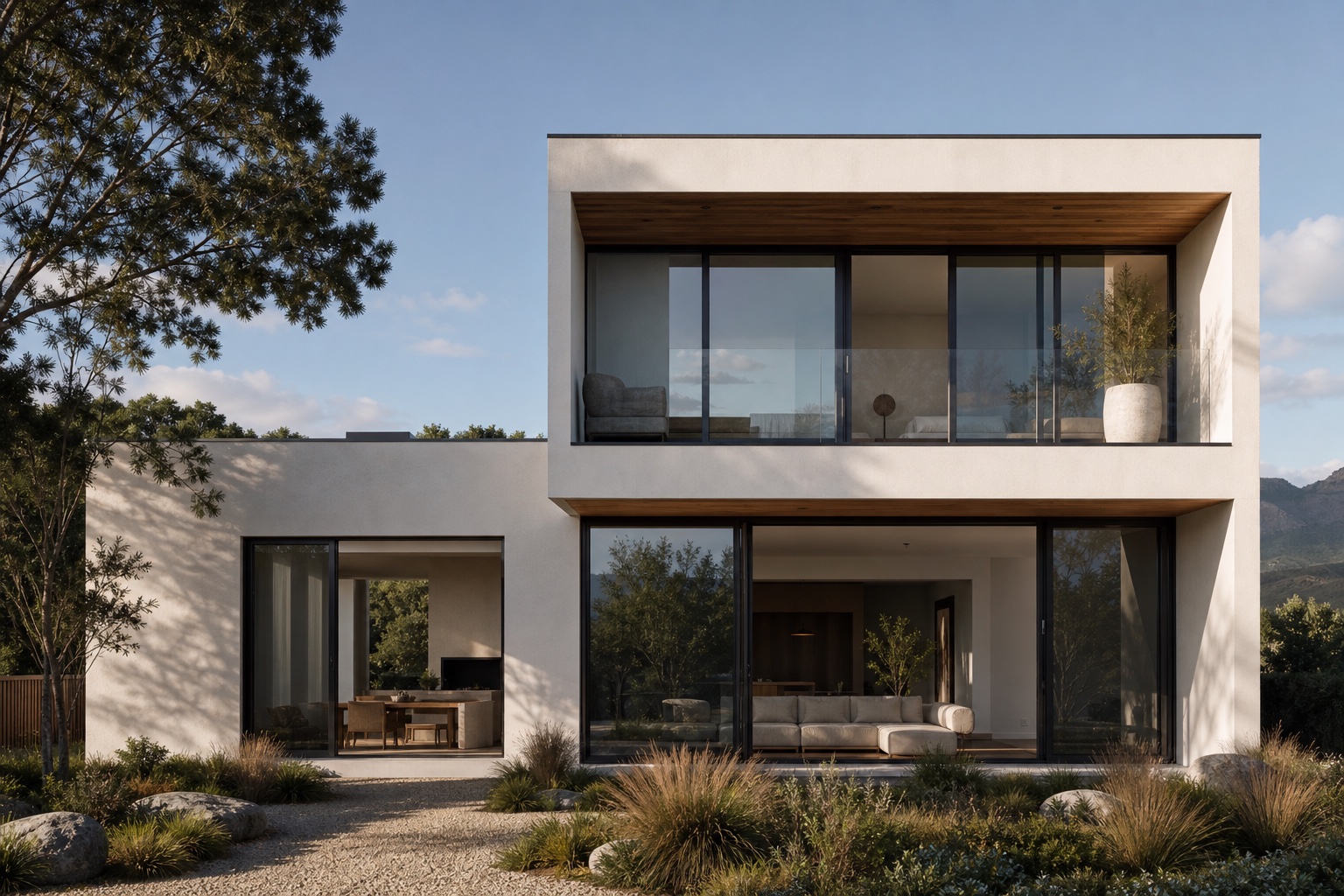
28mm side-light exterior
Use camera position, focal length, and light direction before style words.
Modern two-storey house exterior, clean rectilinear massing, white mineral plaster, warm timber soffits, dark slim aluminium frames, restrained native grasses, gravel path. Eye-level tripod camera at 1.6m, 28mm tilt-shift architectural lens, straight corrected verticals, natural perspective. Soft late-afternoon side light, realistic glass reflections, natural shadow falloff, balanced exposure, subtle editorial color grade, real plaster and timber texture. Avoid CGI gloss, ultra-wide distortion, fantasy lighting, over-sharp edges, and plastic-perfect surfaces.
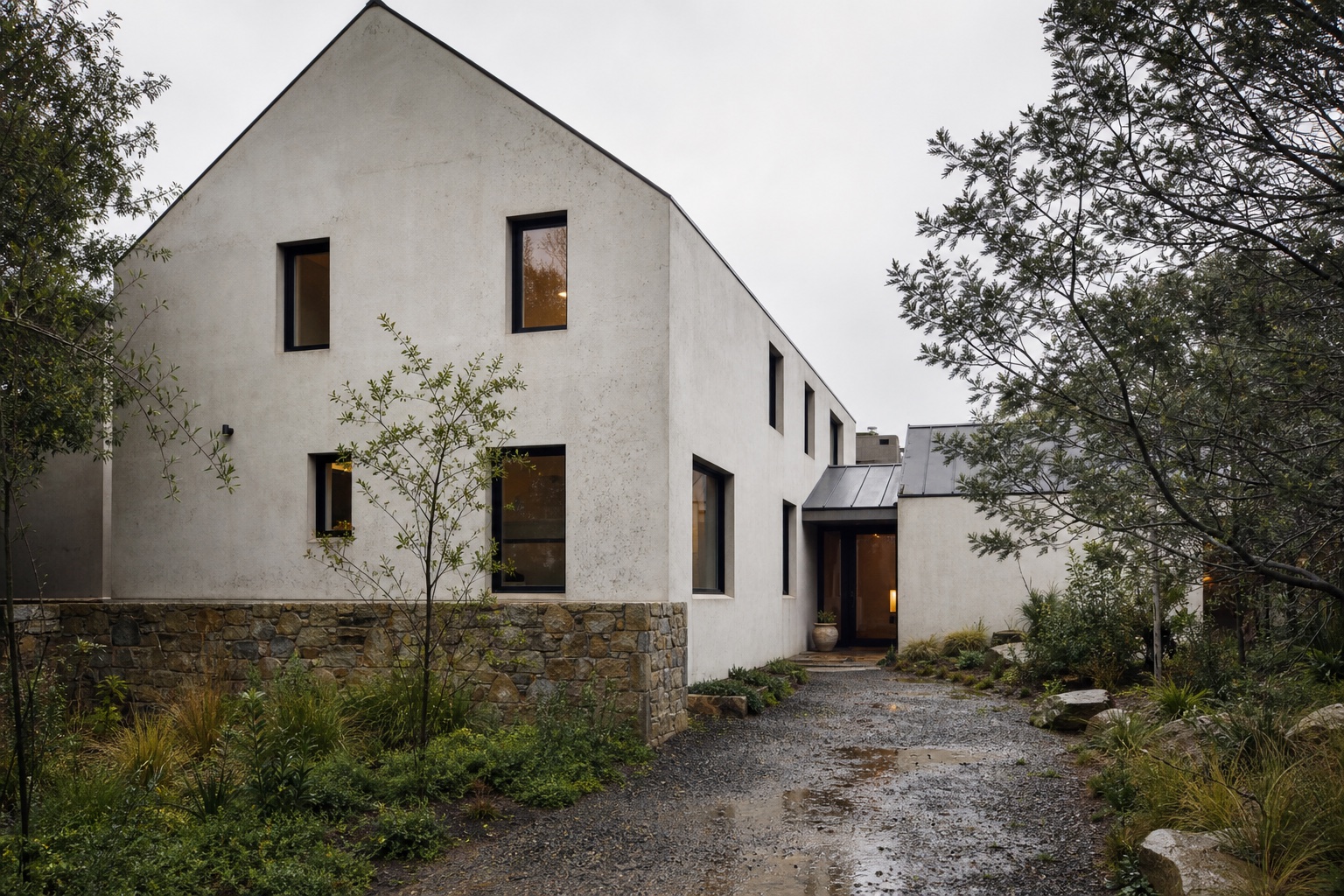
Overcast editorial house photo
Use softer light and surface imperfection when a render feels too polished.
Contemporary gabled house exterior, pale concrete walls, muted stone base, simple black window frames, native planting, wet gravel path after light rain, quiet residential setting. Level tripod camera at eye height, 35mm architectural lens, corrected vertical lines, natural perspective. Soft overcast daylight, muted grey sky, gentle contact shadows, readable concrete pores, slightly imperfect stone, calm magazine-style finish. Avoid glossy CGI surfaces, saturated skies, heroic drama, warped rooflines, and exaggerated wide-angle perspective.
Interior photography prompts
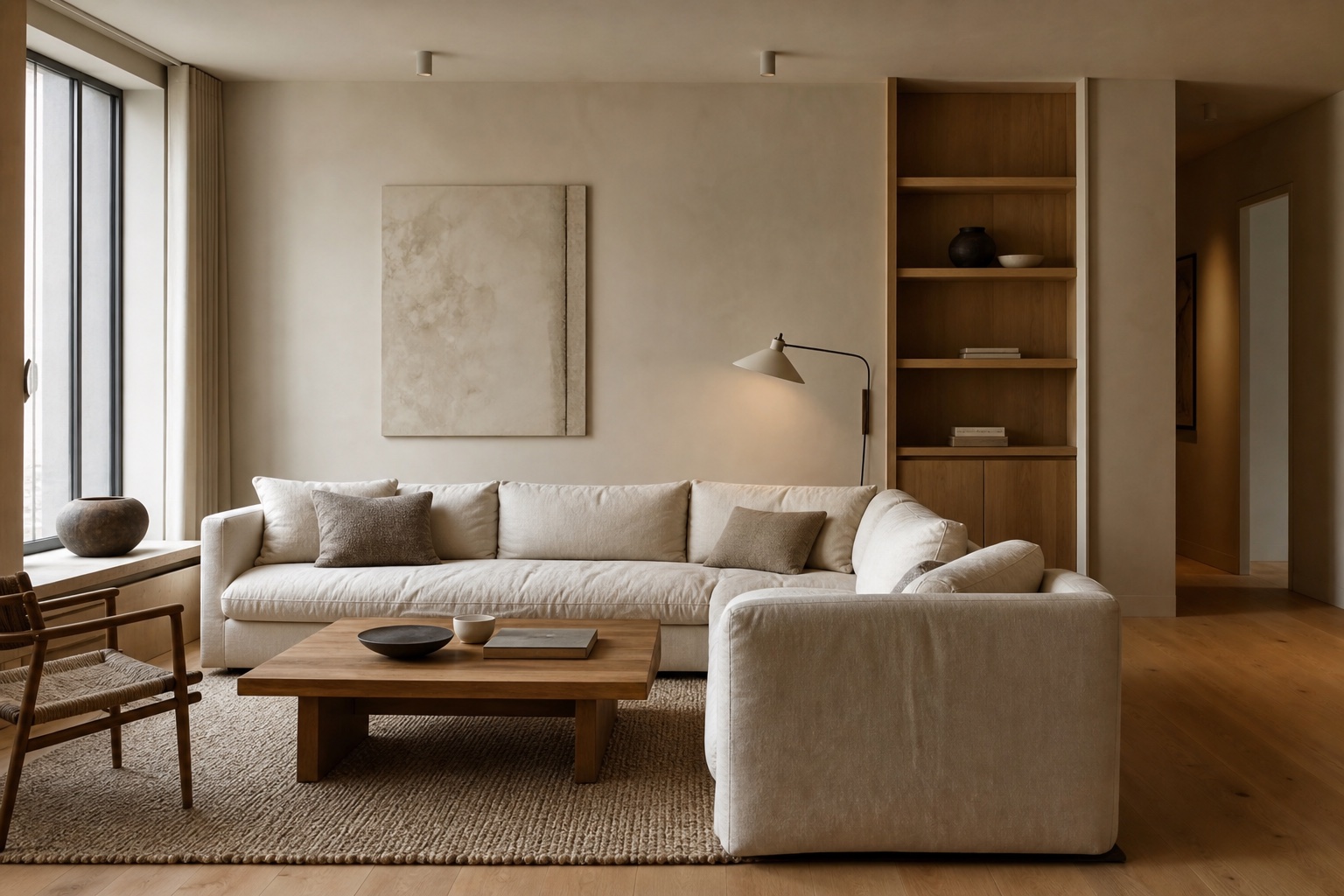
Warm minimal living room
Interior prompts should describe lens control, window direction, and tactile materials.
Warm minimal living room in a contemporary apartment, large window on the left, plaster walls, oak floorboards, linen sofa, low timber coffee table, textured wool rug, simple built-in shelving, uncluttered styling. Chest-height tripod camera, 24mm tilt-shift interior lens, straight verticals, natural room proportions, no stretched furniture. Soft window light from the left, gentle fill shadows, balanced highlights, natural white balance, realistic fabric wrinkles, visible wood grain and plaster texture, restrained interior magazine color grade. Avoid showroom sterility, fake HDR, glowing ceilings, and overly smooth materials.
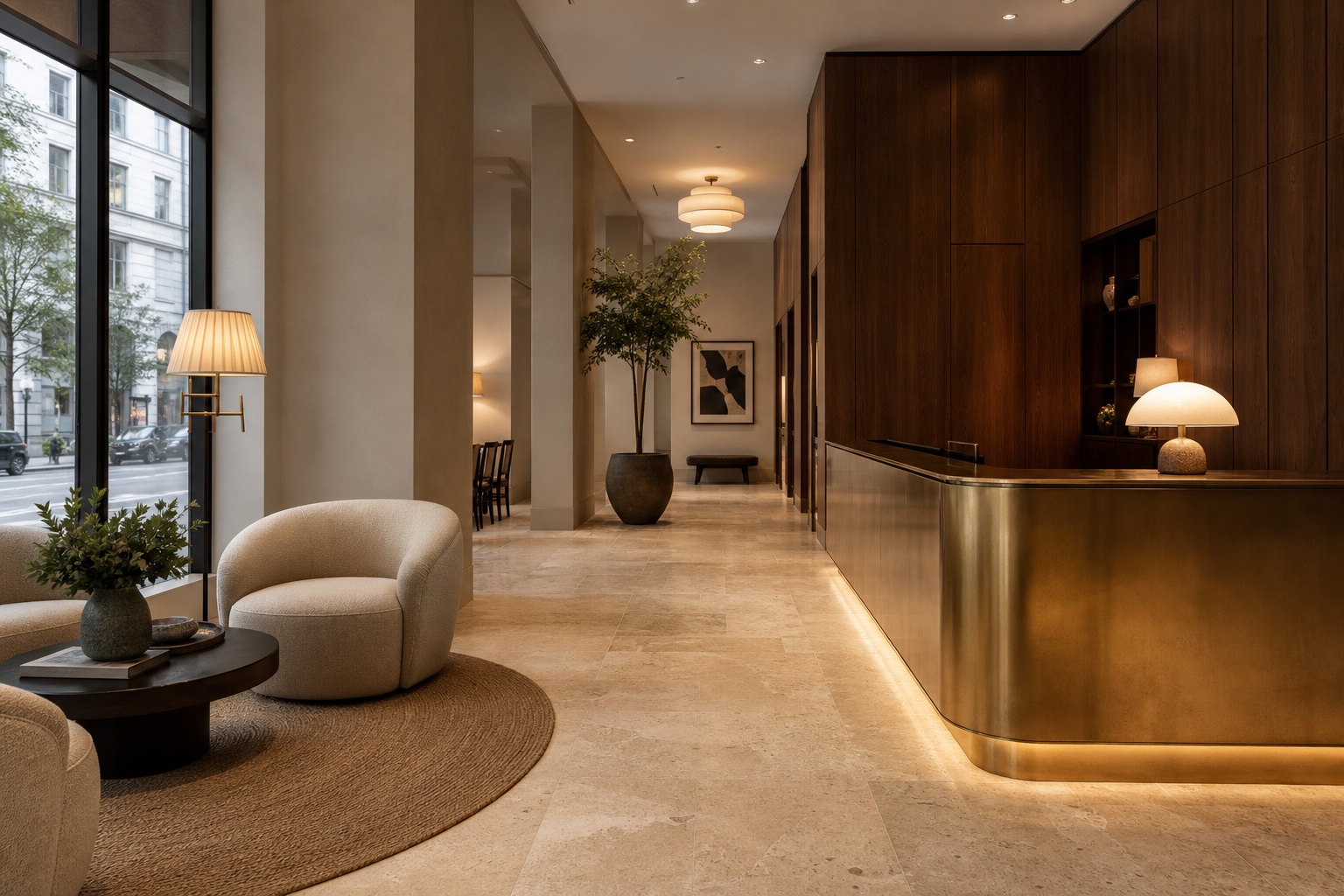
Boutique hotel lobby
Mixed lighting needs exposure language, not just mood language.
Refined boutique hotel lobby, clear circulation path, travertine floor with subtle variation, walnut wall panels, brushed brass reception desk details, curved linen lounge chairs, large street-facing windows, warm practical lamps. Level tripod camera, 28mm architectural interior lens, straight verticals, natural proportions, no fisheye distortion. Warm practical lights balanced with soft ambient daylight, controlled brass and stone reflections, deep but readable shadows, tactile materials, restrained luxury, interiors magazine photography. Avoid over-polished render finish, blown highlights, murky corners, and decorative clutter.
Facade and material prompts
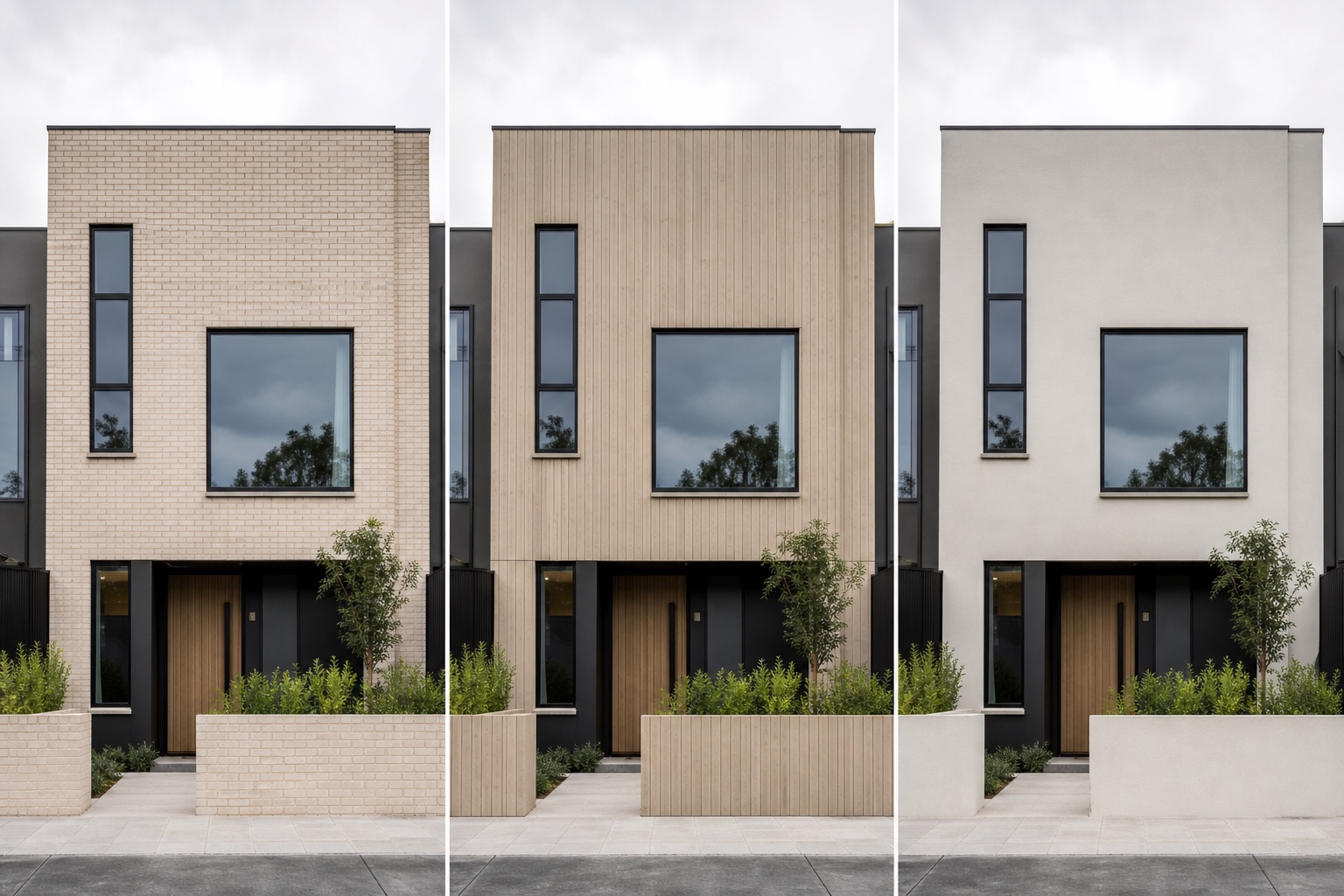
Same facade, three materials
Material studies need identical camera and exposure so the comparison is fair.
Same simple modern townhouse facade shown as three side-by-side material options with identical massing, window positions, door position, parapet height, and facade rhythm. Option one: light handmade brick. Option two: vertical pale timber cladding. Option three: smooth mineral render. Fixed straight-on architectural elevation photograph, level tripod, 35mm lens, corrected verticals and horizontals. Neutral overcast daylight, consistent exposure across all options, realistic material scale, slight surface imperfections, client presentation clarity. Avoid text labels, changed windows, changed proportions, fake shine, and inconsistent lighting.
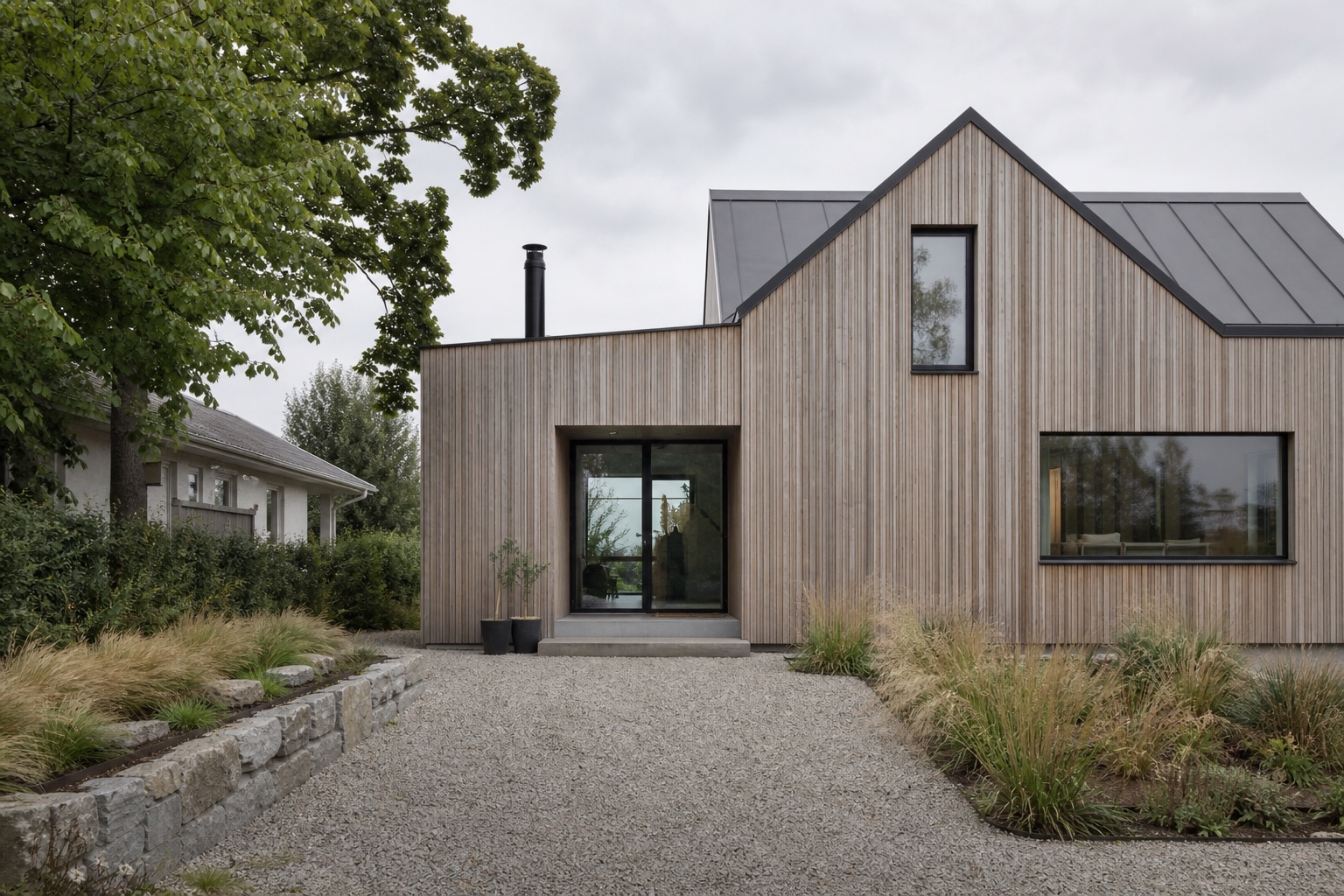
Cloudy daylight timber house
A restrained exterior prompt should name weather, material age, and reflection behavior.
Minimal Scandinavian house exterior, clean roofline, pale vertical timber cladding, black metal window frames, gravel path, native grasses, low stone retaining edge, quiet residential setting. Level tripod camera, 35mm architectural lens, straight vertical lines, natural perspective, no stretched edges. Cloudy daylight, soft shadows, gentle reflections in glass, slightly damp timber variation, believable weathering, calm editorial architecture photography, natural colors, subtle contrast. Avoid hard sunlight, perfect plastic timber, oversaturated greens, and render-like gloss.
Lighting direction prompts
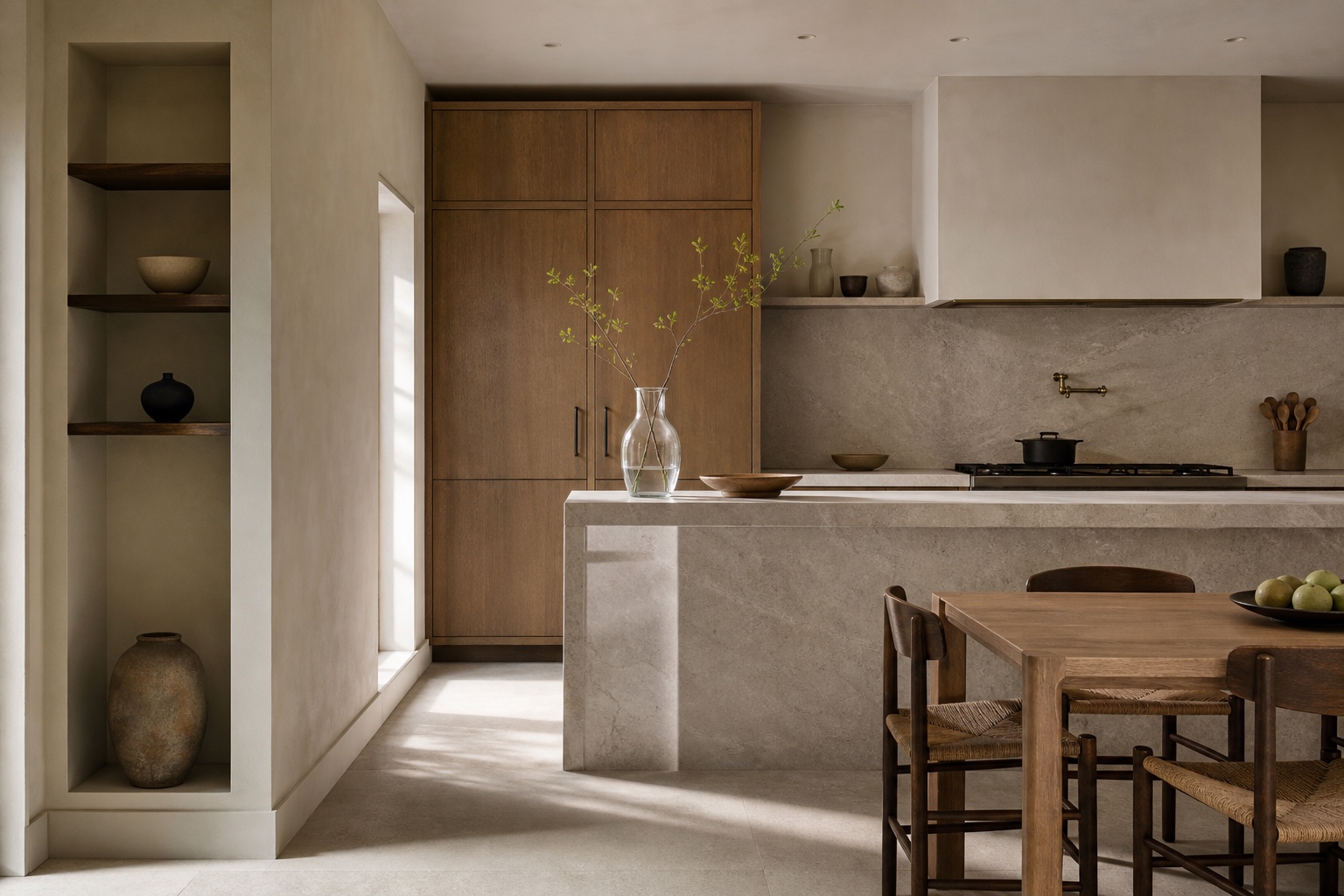
Morning window light
When teaching light, specify direction, highlights, shadows, and white balance.
Quiet kitchen and dining corner, pale plaster walls, oak cabinets, stone counter, simple timber dining table, large window just out of frame on the left. Level tripod camera, 28mm interior architecture lens, corrected verticals, natural perspective. Soft morning window light entering from the left, visible directional glow across floor and counter, gentle shadow gradients, controlled highlights on glass and stone, readable dark areas, natural white balance, understated professional interior photography. Avoid changing the room geometry, glowing artificial ceiling light, HDR contrast, and blown window light.
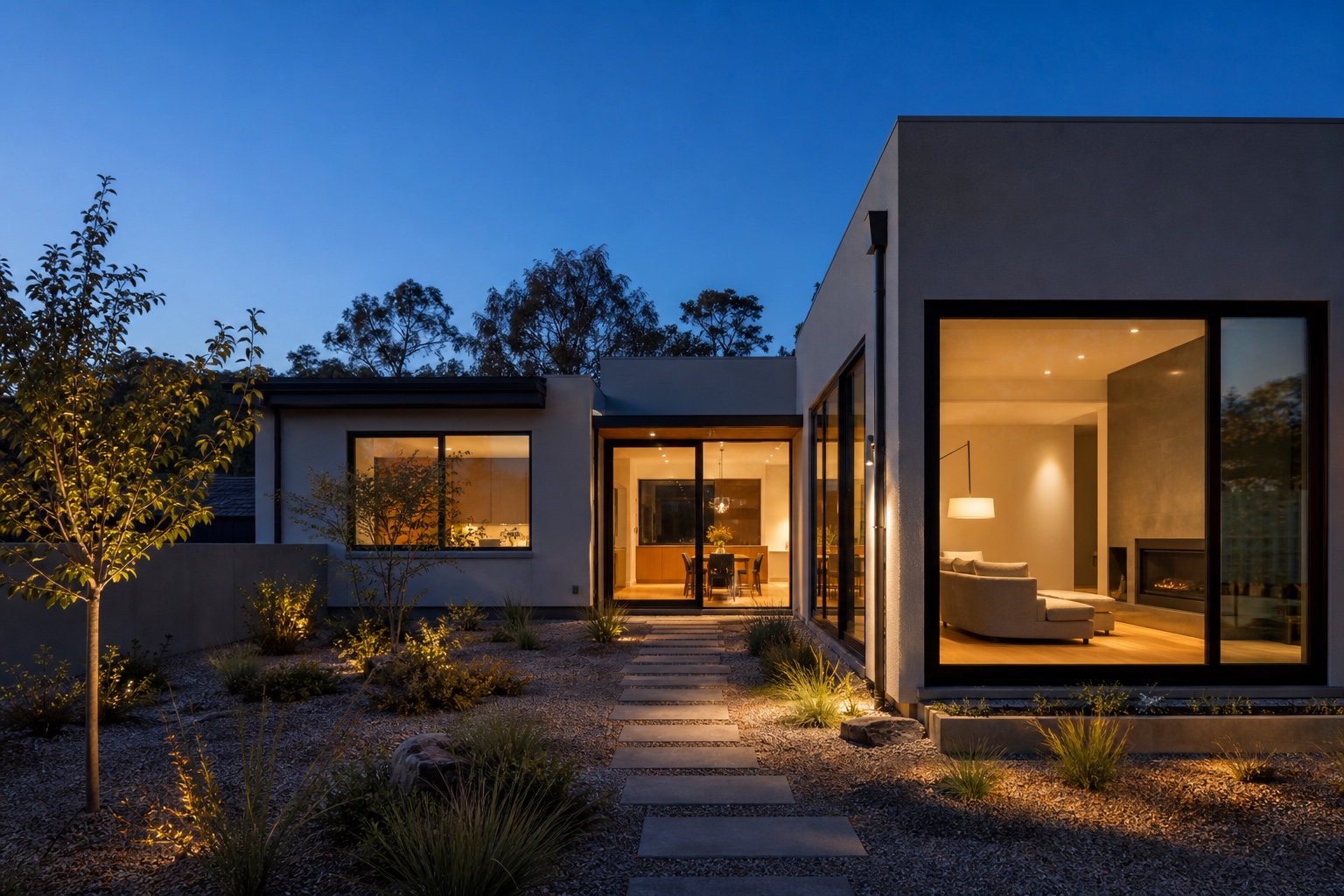
Blue-hour exterior balance
Dusk prompts need exposure balance between sky, glass, interiors, and landscape.
Contemporary courtyard house at blue hour, simple volumes, large windows, garden path, restrained planting, warm interior glow visible through glass. Level tripod camera, 28mm architectural lens, corrected vertical lines, no exaggerated perspective. Cool blue ambient sky balanced with warm interior light, realistic exposure between inside and outside, no blown windows, subtle glass reflections, believable landscape shadows, professional architectural photography, calm credible atmosphere. Avoid cinematic fantasy lighting, neon glow, black crushed shadows, and oversaturated sky.
Client presentation polish
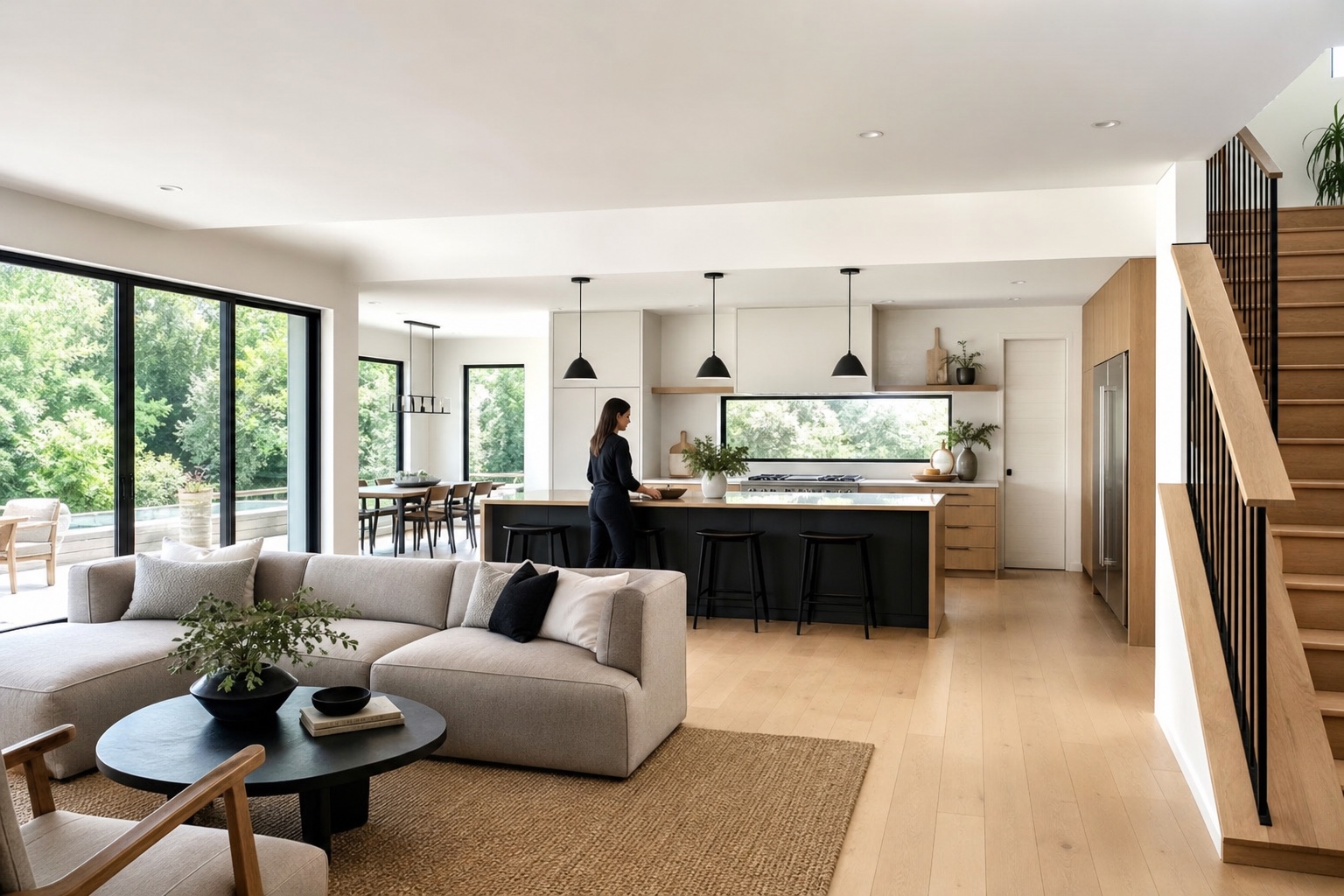
Clear open-plan presentation view
Client images need scale, readability, and calm design intent more than drama.
Clean contemporary open-plan family room and kitchen, simple furniture layout, one realistic scale figure near the island, clear circulation, pale oak floor, white walls, black pendant lights, uncluttered styling, welcoming but not staged. Natural camera height, 28mm architectural lens, level tripod, straight vertical lines, believable room proportions. Bright soft daylight, balanced exposure, realistic shadows, readable material texture, calm professional project photograph. Avoid extreme wide-angle distortion, decorative clutter, artificial staging, over-saturation, and fake render shine.
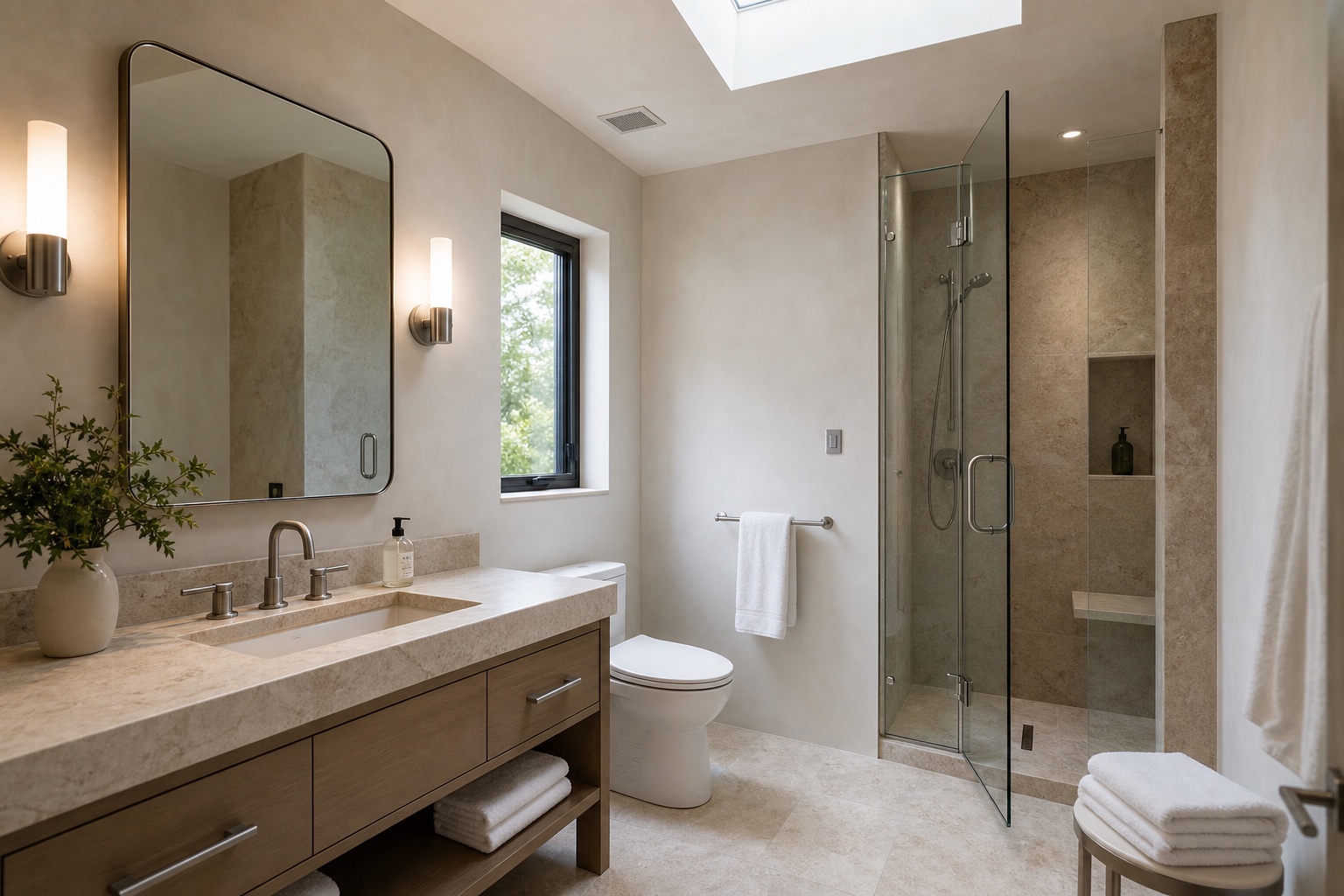
Bathroom with controlled reflections
Final polish prompts should control reflective materials instead of making everything glossy.
Modern bathroom renovation concept, plaster walls, stone vanity, brushed nickel fixtures, frameless glass shower, soft towels, small skylight, minimal styling, no visual clutter. Tripod at natural eye height, 28mm architectural lens, straight verticals, natural proportions, no ultra-wide distortion. Soft daylight from skylight and side window, balanced exposure, readable shadows, controlled reflections in mirror and glass, tactile stone and plaster texture, subtle editorial color grade. Avoid CGI shine, impossible mirror reflections, blown highlights, plastic surfaces, and hotel-catalog over-styling.
Frequently asked questions
What is the best prompt for AI interior rendering?
A strong interior prompt reads like a photography brief: preserve the layout, use a level tripod camera, choose a believable lens such as 24mm or 28mm, describe soft window light, name tactile materials, and ask for restrained post-production.
How do I stop AI from changing my architecture?
Use a clear input image and add constraints like 'preserve geometry,' 'keep openings unchanged,' and 'do not alter the layout.' For final accuracy, verify against your model.
What lens terms should I use for architecture prompts?
For interiors, 24mm to 28mm often feels spacious without becoming absurd. For calmer exterior or detail views, 35mm can feel more natural. Ask for straight verticals and a level camera so the image reads like architectural photography.
Can airender.pro work without detailed prompts?
Yes. airender.pro is designed around preset templates and fast iteration, so you can start with a simple image upload and add prompt details only when you want a more specific result.
Try the fast path
Upload a sketch, model screenshot, or interior image and generate quick concept renders with airender.pro presets.
Launch airender.pro